
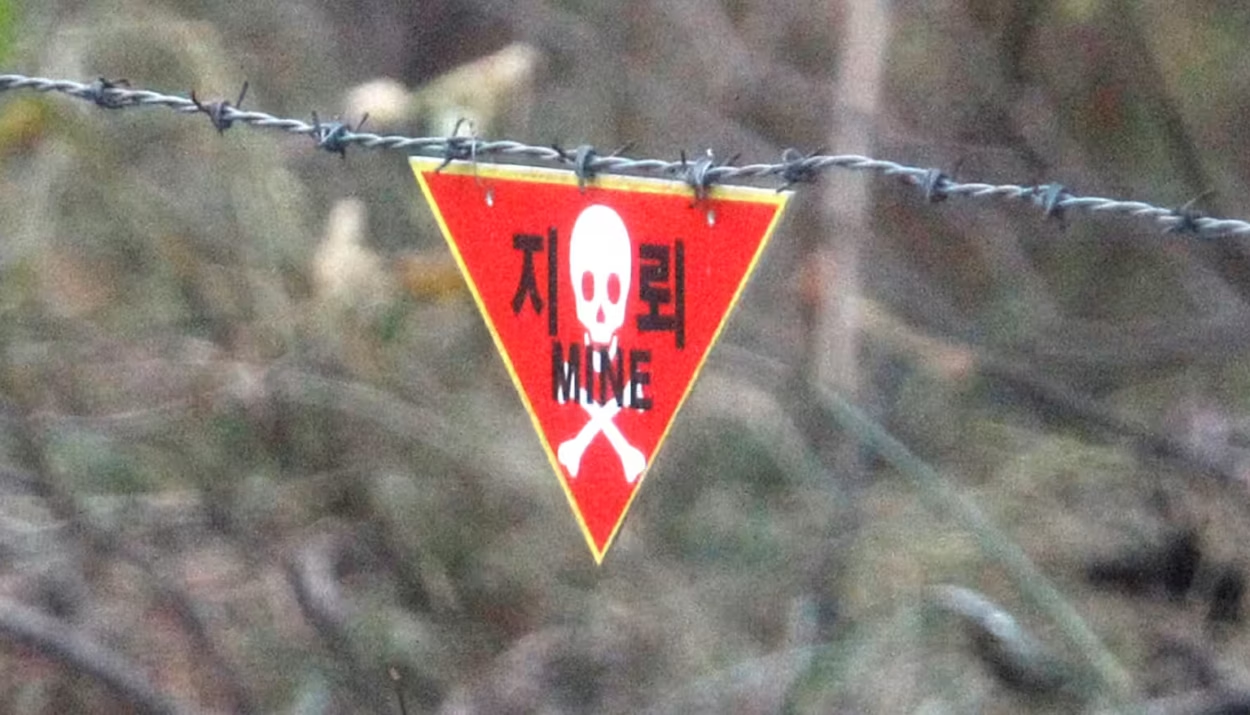
On September 21, 2026, three South Korean military officers were injured in two consecutive landmine explosions inside the Demilitarized Zone (DMZ), approximately ten meters south of the Military Demarcation Line (MDL). According to the South Korean military, the officers were participating in an operation to establish a new search route and investigate suspected North Korean mine-laying activities.
A subsequent joint investigation by South Korea and the United Nations Command (UNC) identified North Korean antipersonnel mines at the site. Investigators concluded that the mines had been deliberately buried rather than carried south by flooding. South Korea and the UNC declared the incident a violation of the 1953 Korean Armistice Agreement, while North Korea rejected the accusations and warned of retaliation.
The incident serves as another reminder of the dangers surrounding the Korean border, more than seven decades after the Korean War was suspended. Yet beyond the immediate question of responsibility, it raises a broader issue of how effectively the legal arrangements governing the DMZ protect those authorized to operate within it.
An Increasingly Dangerous Border
Established under the 1953 Korean Armistice Agreement, the DMZ extends approximately two kilometers on either side of the MDL. Its purpose was to separate opposing military forces and prevent renewed hostilities. Despite its name, however, the area remains heavily fortified and contaminated with landmines.
Since 2024, North Korea has reportedly expanded its construction of barriers, fences, and minefields near the MDL. According to Reuters, thousands of North Korean personnel have participated in these operations, occasionally crossing the demarcation line.
The situation is further complicated by the deterioration of boundary markers, which makes the precise location of the MDL difficult to identify in certain areas. This uncertainty has become serious enough for Seoul to seek discussions with Pyongyang concerning the identification of the line.
Nor was September’s explosion an isolated incident. In November 2025, another South Korean soldier was injured during mine-detection activities. The 2015 landmine incident, which severely injured two South Korean soldiers, similarly demonstrated how explosive hazards could become a source of military confrontation.
These incidents highlight a persistent problem: although movement inside the DMZ is strictly regulated, those restrictions do not necessarily guarantee the safety of personnel operating there.
Security, Accountability, and the Risk of Escalation
The September explosion also triggered political controversy in South Korea, particularly concerning the government’s response to North Korea’s alleged violation of the Armistice. Questions emerged over the military’s communication of its preliminary findings, with critics suggesting that political considerations may have influenced the timing of their disclosure. Such allegations, however, remain distinct from the investigation’s established findings.
Following the October 5 announcement, South Korea’s Joint Chiefs of Staff demanded an apology and the removal of the mines. Meanwhile, the Ministry of Unification emphasized dialogue and peaceful solutions, reflecting concerns that a stronger response could provoke further confrontation.
The September explosion triggered political controversy in South Korea, particularly concerning the government’s response to North Korea’s alleged Armistice violation. Questions emerged over the military’s communication of its preliminary findings, with critics suggesting that political considerations may have influenced their disclosure.
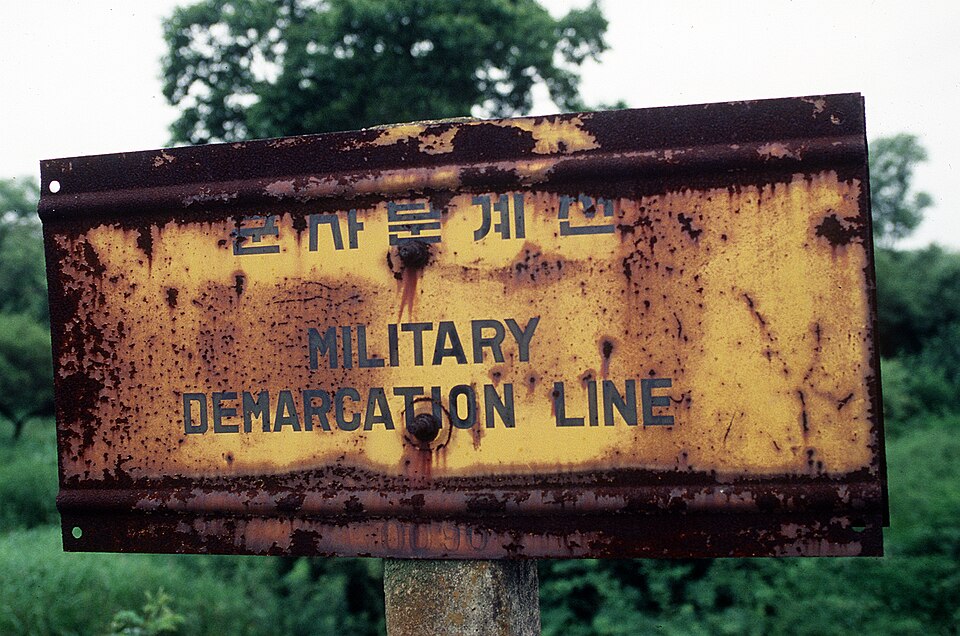
1.1 Photo of the Military Demarcation Line (MDL), sign located in the woods at PanMun Jom (DMZ), separating North and South Korea, 22 November 2010 | Source: DOD Media
The controversy also highlighted a longstanding problem concerning the Military Demarcation Line (MDL). Of the 1,292 markers originally installed in 1953, only approximately 200 remain identifiable. Combined with differing interpretations of the boundary’s precise location, their deterioration has complicated efforts to distinguish authorized military activities from potential violations. Amid North Korea’s expanding border fortifications, Seoul renewed its proposal for military talks on October 23 to clarify the line’s location and prevent accidental confrontations.
The Constitutional Dilemma
The legal situation becomes more complicated when the Armistice is considered alongside South Korea’s Constitution.
Under Article 3, the territory of the Republic of Korea consists of the Korean Peninsula and its adjacent islands. This constitutional claim therefore extends beyond the territory currently administered by Seoul. The Armistice, however, follows a different logic. It divides military control through the MDL without establishing a permanent international border or determining sovereignty over the peninsula. Although these arrangements may appear contradictory, they address different questions. The Constitution establishes South Korea’s territorial claim, while the Armistice regulates the separation and conduct of opposing military forces.
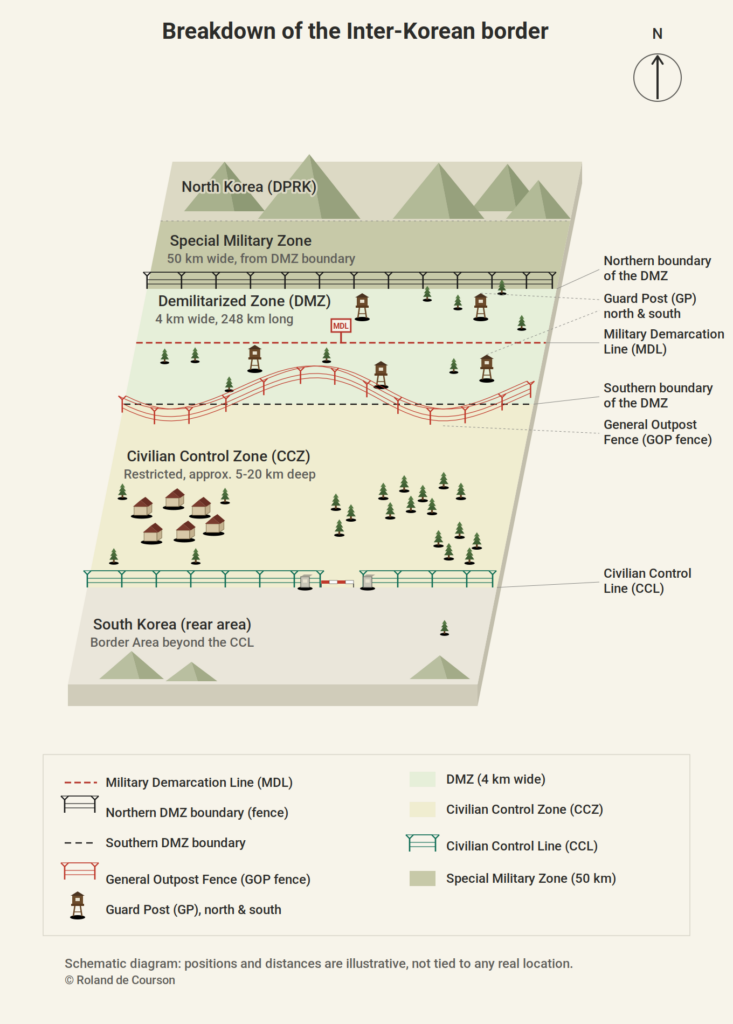
1.2 Breakdown of the Inter-Korean Border | Source: K-Scar
The distinction is particularly important because South Korea was not itself a signatory to the Armistice. The Agreement was signed by military representatives of the UNC, the Korean People’s Army, and the Chinese People’s Volunteers, creating an unusual relationship between South Korea’s constitutional authority and the military arrangements governing the DMZ.
The central issue, therefore, is not simply which state claims the territory, but which authorities may conduct operations within it and how their responsibilities for personnel safety are coordinated. A further layer of regulation concerns civilians. South Korea’s Military Bases and Installations Protection Act establishes restrictions on access to sensitive military areas, including those around the Civilian Control Line south of the DMZ. For civilians living, working, or visiting near the border, these restrictions serve an important security function. Nevertheless, legal permission to enter a controlled area cannot replace practical safeguards such as warning signs, clearly identified safe routes, and reliable information about minefields.
Are Landmines Illegal Under International Law?
The September incident also raises a question concerning the legality of antipersonnel mines themselves. The 1997 Anti-Personnel Mine Ban Convention, commonly known as the Ottawa Convention, prohibits states parties from using, producing, stockpiling, and transferring antipersonnel mines.
However, neither South Korea nor North Korea is a party to the Convention. Its comprehensive prohibition therefore does not automatically apply to either country. This does not mean that landmine use along the Korean border is entirely unrestricted.
South Korea is a party to Amended Protocol II of the Convention on Certain Conventional Weapons, which regulates the use of mines and related explosive devices. Its provisions address precautions against indiscriminate effects, the marking and monitoring of mined areas, and the recording and removal of mines. These requirements illustrate an important distinction: international law concerns not only whether landmines may be possessed or used, but also how their dangers are managed.
Nevertheless, South Korea’s participation in the Protocol does not automatically impose identical treaty obligations on North Korea. The applicable legal responsibilities must therefore be assessed separately.
Similarly, the UNC’s determination that the September incident violated the Armistice should not automatically be interpreted as a finding that international humanitarian law was also violated. If mines were deliberately planted south of the MDL, the conduct raises questions under the Armistice’s prohibition on hostile acts. Questions concerning inadequate marking, recording, or precautions require a separate assessment of the relevant legal obligations.
The September incident thus demonstrates why the legality of landmine use cannot be reduced to a simple yes-or-no question. The location of the mines, responsibility for their placement, and the rules binding the parties all matter.
Preventing the Next Explosion
The September explosion exposes a gap between the legal regulation of the DMZ and the practical safety of those operating within it.
The Armistice regulates military separation and movement, South Korea’s Constitution establishes its territorial framework, domestic legislation restricts civilian access, and international humanitarian law provides additional rules concerning explosive hazards.
Yet none of these arrangements independently guarantees protection against landmines.
Preventing further incidents requires better identification of the MDL, more reliable information about hazardous areas, effective mine-detection procedures, and coordination between the authorities responsible for border operations.
At the same time, the political exchanges following the explosion demonstrate how measures intended to improve security can themselves become sources of confrontation.
The challenge is therefore twofold. On one hand there’s protecting people from explosive hazards, while at the same time there is the need to prevent the response to those dangers from escalating tensions between the two Koreas.
More than seventy years after the Korean War was suspended, the DMZ remains governed by arrangements designed primarily to prevent renewed hostilities. The September explosion raises an important question about whether those arrangements are sufficient to protect the people who continue to operate within them.

- Mines in the DMZ: Movement, Security, and the Legal Boundaries of the Korean Border - November 13, 2026
- The Arsenal of the East: South Korea’s Defense Pivot to Europe - July 17, 2026