


What happens when the digital future we imagined and invested in during the early 21st century comes….and backfires? What happens when the fever pitch of technological integration and innovation does not achieve desired results but forces us to confront an uncomfortable, hard-to–admit truth that maybe we were wrong that digitization necessarily makes things easier? And how can we contend with the knowledge that the first true test subjects of experimental, prolonged technology use have been children? Following a decade or more of strong support and investment to promote individual laptop use, digital textbooks, and online assessments, school districts in several nations are beginning to question these initiatives’ effectiveness on student learning and the unintended consequences of classroom instruction digitization. As part of an ongoing personal series on digital technology, AI usage, and their effects on the modern classroom experience, I will examine the emerging global trend advocating for the reversal of digital tools implementation in learning spaces, especially in primary and secondary schools.
Increasing Digitization
During the COVID-19 pandemic, which forced classes to be conducted online for an extended period of time, schools around the world invested heavily in providing electronic resources to students, teachers, and administration. This time period was a boon for Google in particular, as its Google Classroom learning management system expanded rapidly in countries like the US and Italy as classes went virtual. Since the rise of online assessments in the US in the mid 2010s, Google had already been promoting its low-cost Chromebook laptops to school districts as a way for students to complete assignments online, use its suite of productivity tools, and presumably set so-called “digital natives” up for success. Chromebook sales skyrocketed and reached their peak in 2020 and 2021 and are now used in over 93% of school districts in the United States alone. In the 21st century, schools have commonly seen the potential of ed-tech tools like personal student devices and digital textbooks to boost accessibility, engagement, communication, sustainability, assessment tracking, and learning personalization.
After a decade of experimentation, educators across the globe are observing the results: in many cases, edtech has had no conclusive effect either way on student performance while technology regulation has proved challenging within and beyond the classroom with mixed, if not detrimental, effects on student behavior, focus, and crucial skill development. AI usage in particular is worrying, as some warn that AI reliance could prevent kids from developing their own reasoning processes and frameworks by outsourcing the job of thinking for themselves to AI whether in school or at home.
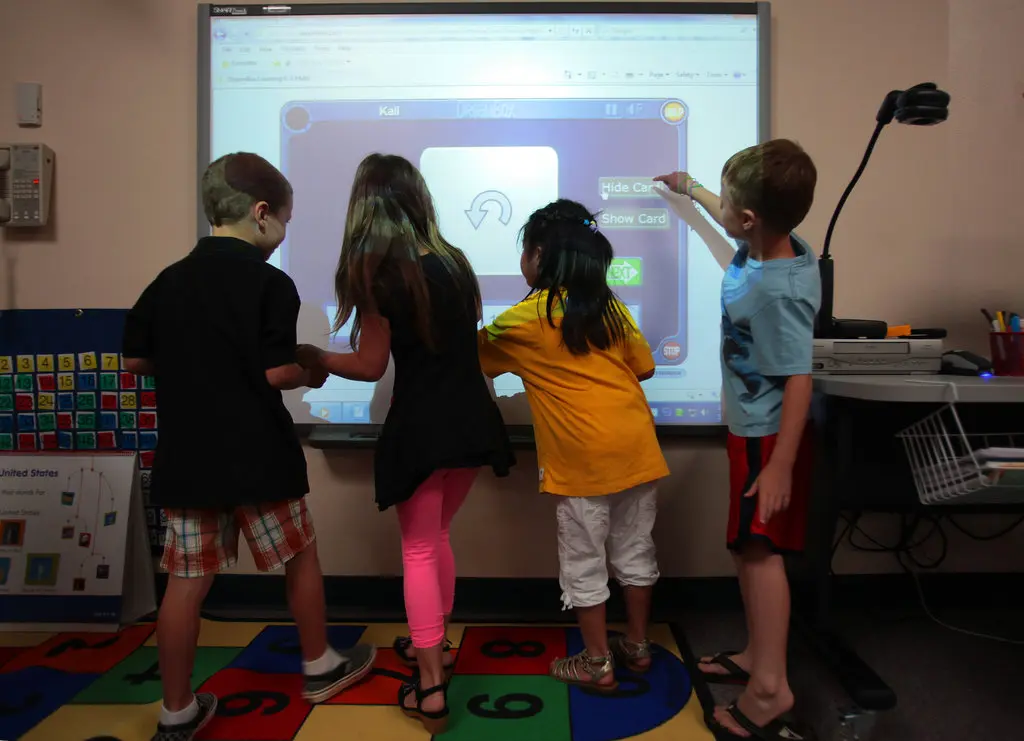
Students using an interactive whiteboard, one of the earlier classroom tech components, in 2011. Source: The New York Times.
Northern Europe: Back to Basics
Nordic countries continue to receive high marks on educational innovation and student achievement among OECD countries, per 2025 education reports, and thus often serve as benchmarks for success replication in other nations. Nations like Sweden and Denmark were some of the first to lead the shift towards tech in the classroom, but their Education Ministries have recently started reversing course. In Sweden, for example, the government has renewed funding for a return to printed textbooks amid concerns about overreliance on screens and declining cognitive abilities. Denmark has done the same, as well as banning mobile phone use from the classroom and extracurricular activities and only using laptops under supervision for supplemental classwork. Despite these efforts, many acknowledge that it is still important for students to gain the digital skills necessary for participating in the modern workforce. Sweden’s business leaders worry about the long-term viability of the nation’s successful tech companies like Spotify if students are not sufficiently engaged with technology from a young age. As schools in these countries shift back to basics, educators acknowledge that technology should take a more complementary role to the learning process rather than replacing tried and tested methods for academic achievement.
Japanese and South Korean Approaches: Tech Advocacy Excitement and Challenges
South Korea and Japan stand out as countries currently taking a more pro-technology stance for classroom integration, with varied results. In 2023, the Korean government announced a joint initiative with textbook companies for an “AI Digital Textbook Promotion Plan.” This plan (initially proposed as mandatory by law, but later morphing into a one-year voluntary program) used AI-generated content tailored to students’ different learning styles that proponents hoped would also meet the challenges of students with disabilities or from multicultural backgrounds. However, just four months after the textbooks’ 2025 rollout, the program was completely halted due to myriad technical issues and complaints from schools where the textbooks were used.
The government’s big swing wound up a huge misstep and a financial loss, with teachers, students, and textbook companies left to suffer the consequences. As the nation’s tech companies and institutions continue their aggressive AI push into educational spaces (see my previous NOVAsia articles on this topic), it remains to be seen if actual practice will provide the desired results.
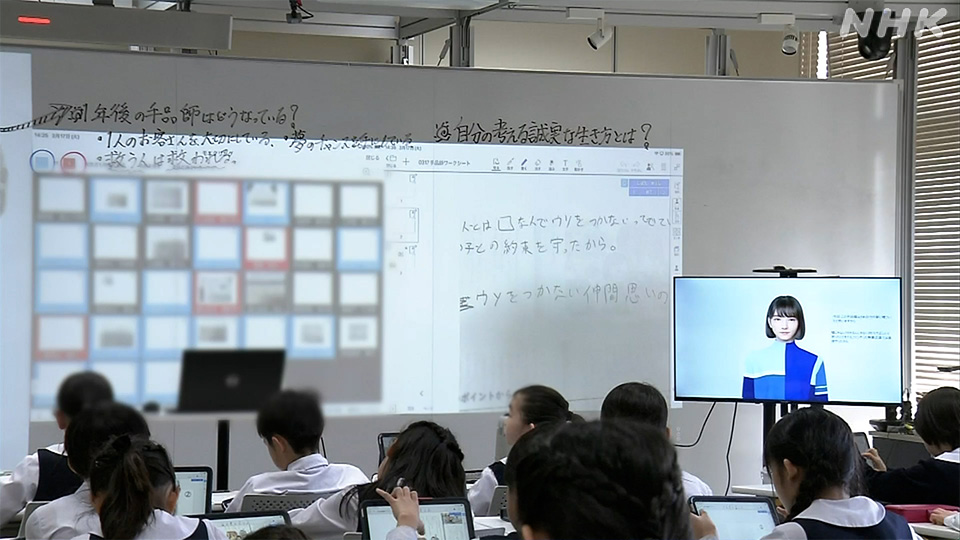
Students in Tokyo using “Saya,” a generative AI classroom helper. Source: NHK World Japan.
In Japan, private sector government advisors have recently suggested an overhaul of its educational practices in order for students to better cultivate skills that adapt to an AI-oriented world. Out of concern for Japan’s slower AI adaptation rates compared to other countries, these advisors worry that students will not be prepared for the realities of modern life and workplaces if schools continue to use old teaching methods and learning tools. In response to these concerns, trial programs like “Saya,” a generative AI bot shown onscreen in elementary classrooms in a Tokyo school, have gained steam. Saya looks like a real person, speaks to students through a monitor, and is meant to deepen student understanding of ethics lessons through real-time dialogue with children. Students report that Saya’s challenging viewpoints are easier to understand coming from the bot than from their teacher, and one teacher praised the AI tool for making classroom discussion more lively. For now, these initiatives remain pilot programs among a more cautious approach to integrating AI in the classroom: earlier this year, the country approved a new set of high school textbooks that discuss AI educational use in detail.
United States Pushback
After a March 2026 New York Times article entitled “Chromebook Remorse” dropped, news outlets and comments sections were abuzz with opinions corroborating its story with personal anecdotes and possible solutions. The article detailed one American school’s reworking of its Chromebook policy as a result of screen-related student behavioral issues, bullying, and distractions. The laptops were no longer allowed to be freely used at home or school and were instead kept on laptop carts to be pulled out for use at each teacher’s discretion. For many older Gen Z individuals (including myself), this system is familiar and similar to how classroom computer usage looked in the early 2010s before the Chromebook wave hit. This school’s initiative is just one of many approaches in other US states to emphasize “intentional” technology usage rather than turning to it as a blanket answer to education problems. Though cell phone restrictions are widespread in American schools these days, students reportedly still find ways to use them or turn to school-provided devices instead to stave off boredom during class. Banning the school laptops from personal use is seemingly a last-ditch effort to curb class distraction and encourage critical thinking skills, especially considering many schools’ now-embedded dependence on sites like Google Classroom for learning management. A compounding issue is that in the years since the pandemic, the devices themselves have reached a point where they require maintenance or replacement, something many districts just do not have the funds for.
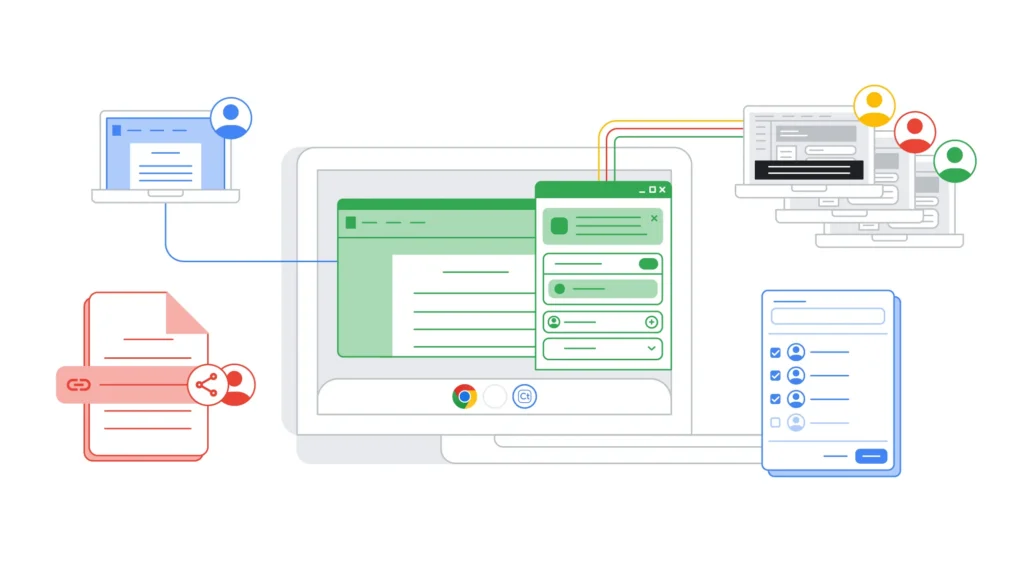
Google Classroom graphic. Source: Google.
Students and teachers at the school from the NYT article expressed satisfaction with the more limited screen policies, citing the benefits of more old-school forms of play and face-to-face communication with teachers and peers. A similar initiative prioritizing analog note and test taking in a North Carolina school district found that student stress was lowered while test scores and retention rates increased. More and more school districts seem eager to replicate these results, for good reason.
Of course, laptop and service providers like Google will likely continue to promote their lucrative edtech in school districts in the US and beyond. The company has even released new guidelines and toolkits for using AI in education specifically tailored to educators, guardians, and its own stance on the technology’s role in classrooms. The prospect of looping in potential lifelong users of Google’s suite of productivity tools may prove too tempting to let go of just yet. But with public opinion in the US and abroad becoming more wary of technology’s place in the classroom, industry leaders may have to reflect on the past decade’s lessons and rethink their place in education. We all owe it to these students to prioritize their healthy intellectual, social, and emotional development in a rapidly changing, pro-technology world.