
At the end of 2025, I wrote an article for NOVAsia on the challenging relationship between Korean higher education and AI. I concluded this discussion with a lingering question of my own: what is the current role of higher education in preparing students for their futures? Due to the rapidly changing AI landscape, I felt this topic was due for an update as universities across Korea refined their guidelines and best practices regarding AI for the new semester beginning March 2026. Over the winter 2025-2026, the decisions made and projects proposed by these higher education institutions have contributed to a continuing redefinition of a university’s role amid the widespread adoption of advanced technologies and current workplace trends regarding AI. The broader trend among Korean universities seems to be a push for more AI integration into study, from offering new degrees in AI technologies to actively promoting ethical usage in the classroom by both instructors and students. Many schools emphasize the necessity of AI literacy for current students’ future career prospects with an acceptance that AI has become an essential part of 21st century life. Korea’s current job market reflects a fervor for AI that is reorganizing the nature of work itself, influencing not only recent graduates’ prospects but also affecting the responsibilities and expectations of current office workers and company managers. Between the university and the workplace, AI has begun conversations both anticipated and unaccounted for in the rush to adopt the technology.
University Guidelines
Following a spate of classroom cheating scandals involving AI across Korea’s top universities during the fall semester 2025, the nation’s higher education institutions rushed to combat the trend in preparation for the 2026 school year. The cheating incidents were not only an indictment of even the most prestigious, resource-rich universities’ inability to anticipate students’ AI corner-cutting, but also put their global rankings at risk. QS, the well-known agency which releases university rankings, has stated that universities’ ability to responsibly manage AI usage will be considered as part of its long-term evaluations of institutions, with possible implications on their future reputations. For those struggling to define their stance on AI and implement new policies, QS developed an expert-led AI Capability Framework which can help identify gaps in current AI practices and guide schools towards informed AI integration across all areas of university life.
Seoul National University, for its part, published an AI Guidelines document to be implemented from January 2026. It includes both usage and ethical guidelines that apply to instructors, students, administration, and other university staff in research, management, and classroom contexts. The university also explains that it will refrain from imposing strict restrictions on AI in favor of giving instructors contextual discretionary powers, encouraging AI use that “harmonizes creative scholarly activity with social responsibility.” Meanwhile, Yonsei University, one of the schools swept up in cheating scandals, has been slow to finalize its planned updates to AI guidance, with its most recent publicly available guidelines dating from May 2024.
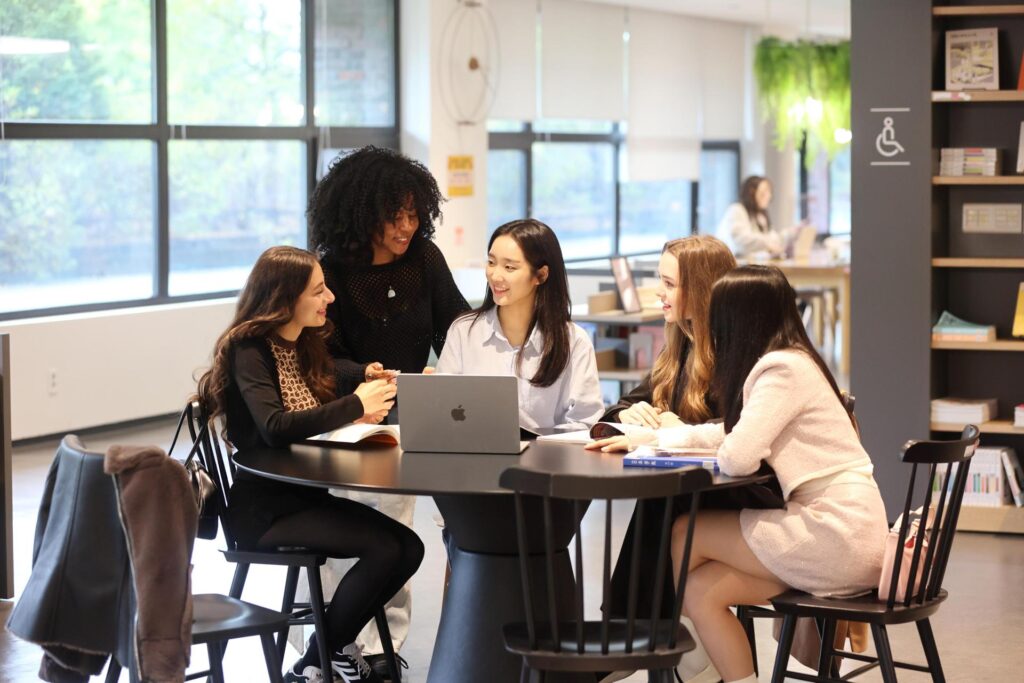
International students in Seoul. Source: Seoul Women’s University
New AI Initiatives
As universities further define the boundaries of AI’s role at their institutions, many schools are pushing for optimization of the new technology to further their scholarly output, reputations, and attractiveness to students. At Chungnam National University in Daejeon, the university’s president is adamant about increasing student, professor, and administrative AI literacy and is actively approaching the technology with an open mind. With this in mind, the university has launched their “Glocal Lab” project to connect pharmaceutical research with industry practice with the help of a new integrated AI R&D platform. The school hopes that initiatives like this will kickstart more bids to draw students to universities outside of Seoul and boost regional job markets by attracting high-quality talent to the research institute, including international students looking to settle in Korea long-term. Even top Korean firms like LG have launched government-recognized in-house AI graduate programs, with the intention of making Korea more competitive and innovative in the global AI market.
On a government level, the Korean Ministry of Education in 2025 turned to universities for help administering intensive courses on AI to adult workers across a variety of sectors. With over 11,000 participants, the demand for digital job skills training was clear, and the program will run again with expanded university participation in 2026. This signals a reality that new graduates face upon entering the job market in 2026: if companies are pushing for more AI integration, then where do human skills fit in? And how can universities prepare current students for this new employment landscape?
Job Market and Future Prospects
Critic and professor at Yonsei University Jeong Gwa-ri believes that humans primarily feel two emotions when they consider AI: greed and fear. These emotions might arguably be the most prominent propellers of the AI boom, with both having an impact on its rise. Greed of the technology companies which drive investment towards new products and concepts hinged on hopes for future profit opportunities. Greed of those who happen to bet on successful AI companies and projects once, and hope their luck will last indefinitely. Fear that one may be left behind if they miss the train on AI. Fear of losing one’s job if they can not quickly learn how to utilize brand new innovative tools. Fear that AI may completely eradicate the need for human input, creativity, management, etc. or in extreme scenarios, wipe out the need for human thought at all. These are the concerns driving AI crises in education and employment, with heavy repercussions on young people stuck between both.
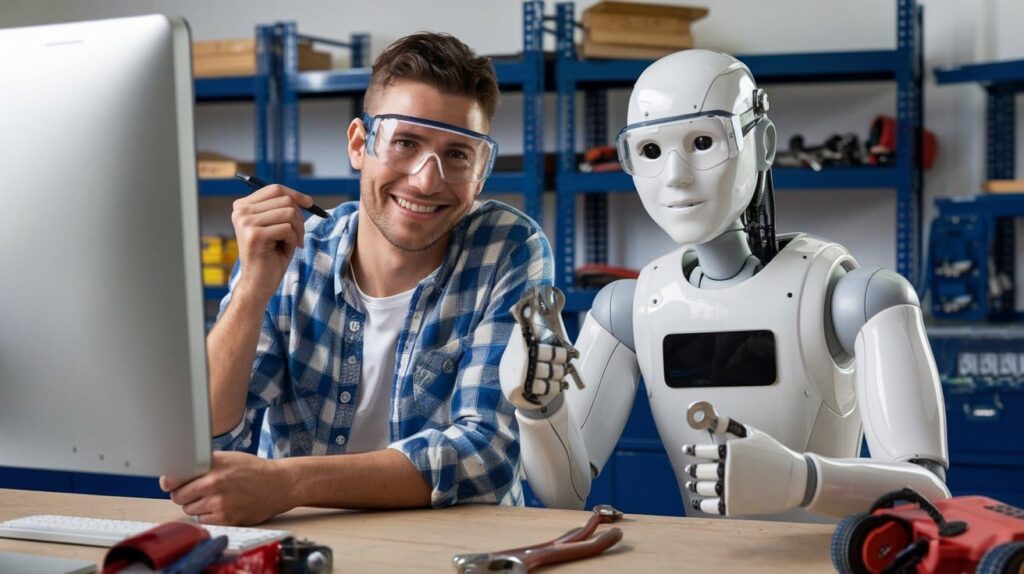
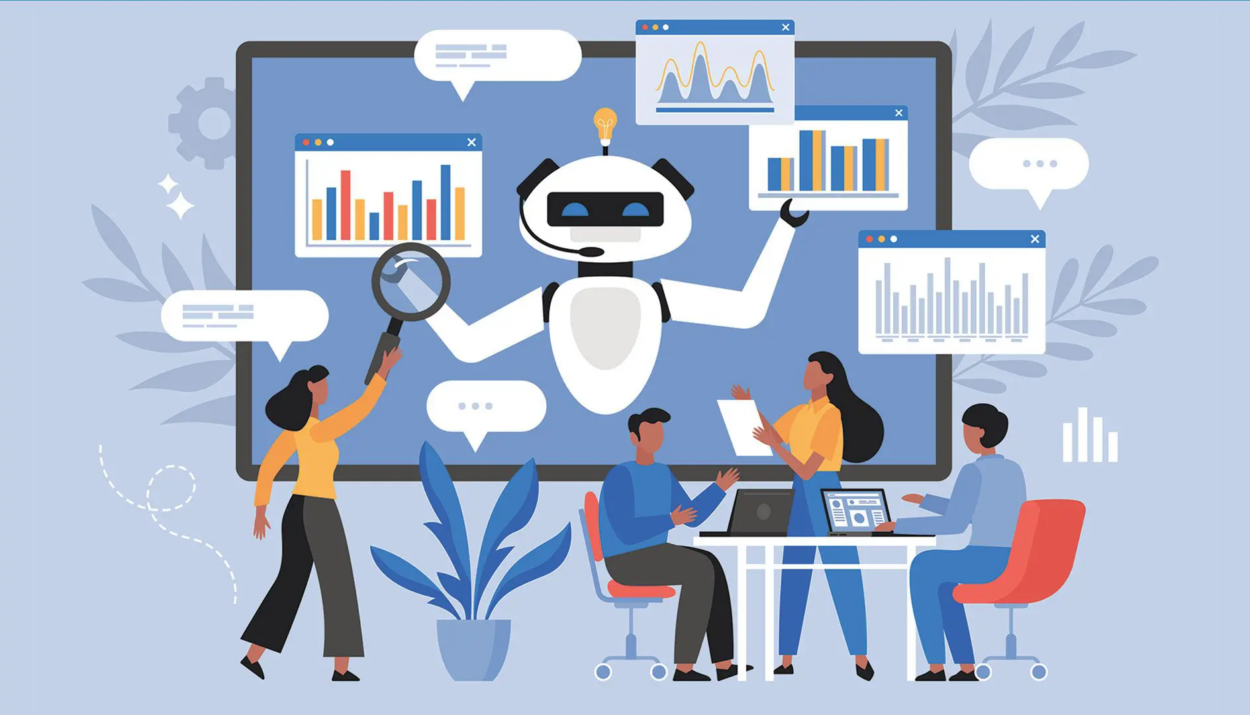
Visualization of AI as the modern coworker. Source: Blogger Deepak Gupta
A March 2026 study from AI company Anthropic shows that despite the hype around AI capabilities, gaps remain between claims of what AI can do and what tasks it can actually carry out. Furthermore, their research showed that while unemployment in the US has remained stable for those workers most exposed to AI use, hiring of young people has slowed in the most AI-exposed industries over the last few years amid cost-cutting measures. In Korea, reports show a similar trend among young hires, but reveal that hiring among workers in their 50s has actually increased in the most AI-dependent sectors. Some scholars suggest that workers with decades of experience are perhaps better at identifying effective ways to integrate AI into their roles than new hires without knowledge of workplace dynamics and job expectations. A survey on AI usage among South Korean workers showed that the 30-39 age group had the highest AI workplace utilization rate among all age groups, giving additional credence to the idea that seasoned employees are better able to make AI tools work for them. AI implementation extends beyond managerial positions and the IT sector, too: even job seekers in fields like accounting have faced setbacks as firms seem more eager to “hire” AI tools than human employees.
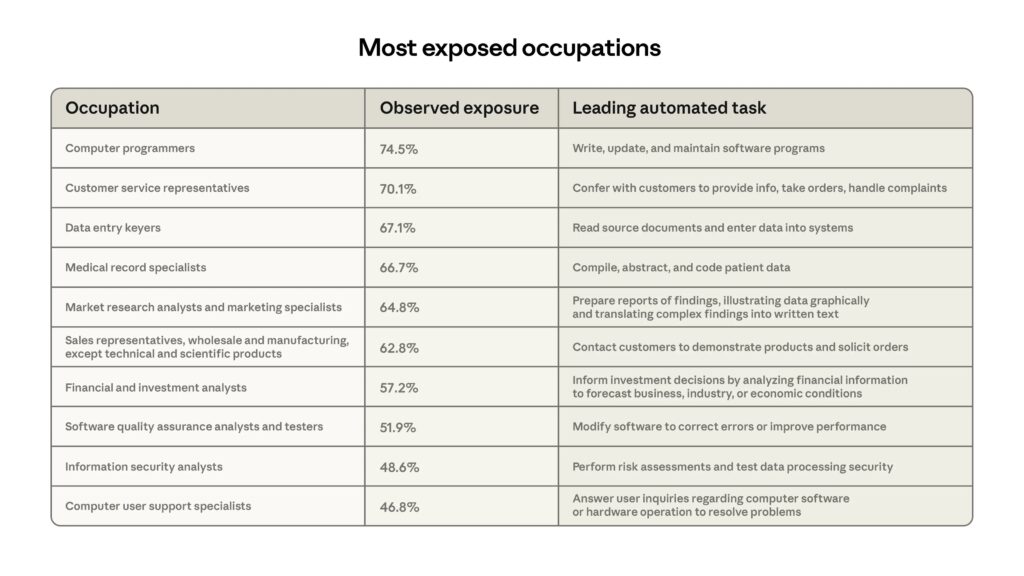 The results of Anthropic’s study on the most AI-exposed occupations and tasks most commonly fulfilled by AI tools. Source: Anthropic
Universities and experts often point to the need for effective AI use, but what does this mean? In the office, some Korean employees see their roles and workloads expanding as hiring slows, meaning that they have to get creative in how they utilize AI to carry out tasks that fell to other colleagues in the past. Flexibility is now the name of the game, as workers are expected to adapt to new expectations from their employers. In a country like Korea, where a survey showed the most hated workplace phrase heard by bosses is “This isn’t my job,” the additional expectation to learn and effectively use AI to carry out even more tasks might create more friction and stress in the office. A Harvard Business Review research project into AI and changing work habits signaled that even though AI use seemed to boost worker productivity in practice, it actually intensified the individual workloads completed by each employee. It seems that only those who are able to competently use AI to adapt to shifting job requirements without placing extra burdens on themselves can survive and thrive in this current job landscape.
Rampant AI use does not mean that human skills will go by the wayside, however. Many experts point to the need for smart decisionmaking on the part of humans to direct AI where it is needed most. One midlevel worker at a Korean company shared his view that AI has enhanced the work experience for those who have learned to wrangle it, saying that “‘People who are good at giving instructions to humans are also good at giving instructions to AI.’” The “people skills” required in positions of management are still useful, then– it is just that the subjects of direction are changing from humans to AI tools.
In this environment, it makes sense that Korean universities are introducing AI education programs to better prepare students for their careers. Students are already using the AI tools at their disposal for studying, counseling, or even friendship, but may not be aware of how their understanding and efficient use of the technology can give them an advantage when job searching. Universities, then, are recognizing the changing times and trying to maintain their 21st-century status as sites of both knowledge acquisition and job training by catering to the demands of an increasingly AI-oriented society. At the same time, the old worries remain. Many wonder about the potential for AI to cause serious regression in critical thought capabilities and whether it will stoke laziness or stifle true creativity in younger generations. In the meantime, this current period of trial-and-error will surely provide us with lessons for artificial intelligence’s place in a human society.