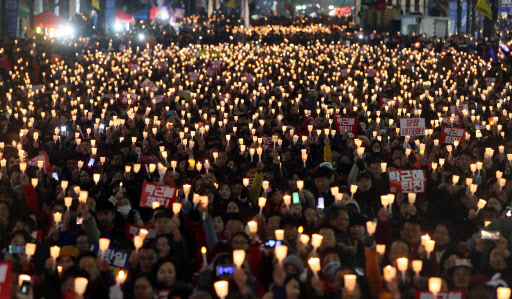


An anti-China protest in Seoul on October 3. Source: The Korea Times
As an extended holiday week approached, South Korea witnessed fierce public debate surrounding the official September 29 beginning of a visa-free entry program for Chinese tourists. Intended as a pilot program, the temporary scheme is planned to run through June 2026. However, anti-China demonstrations against the government’s move to allow visa-free travel to groups of Chinese visitors have grown in size, location, number, and reach. Backlash has spread outside its typical boundaries, burgeoning from a fringe movement to a more general base of support thanks to the frictionless nature of wide-reaching social media platforms. Amongst all the noise, South Korean President Lee Jae-myung has remained firm in his support for the travel program, actively discouraging the discriminatory nature of the rallies. His government’s resolve may be tested, however, if the program’s opponents continue to use the scheme as a touchpoint for their larger concerns about Chinese influence in Korea.
Explaining the Travel Scheme
The visa-free travel scheme itself can be considered a response to China’s own 2024 easing of travel restrictions for South Korean nationals along with those of over 40 other countries. The move to encourage foreign visitors to China with a 30-day visa-free travel period was largely met with success, not least among young Koreans. This year, Shanghai surpassed Tokyo as a top destination for Koreans traveling abroad, who now comprise the largest group of foreigners exploring the city. As China’s food, culture, and attractions become more appealing for Koreans, the South Korean government’s symbolic move to reciprocate the gesture cannot be understated.
South Korea’s plan allows for Chinese travelers in groups of three or more to enter the country and stay for up to 15 days without a visa. Amidst stagnating economic trends, the government seeks to stimulate the domestic tourism industry with initiatives specifically tailored to Chinese visitors, who are already the largest group of foreigners (making up over 29% of inbound travelers in 2024) entering Korea for leisure by nationality. To lessen common barriers to travel, Korean companies now promote multilingual services to attract tourists and have even begun to allow payments from common Chinese mobile services like Alipay+ and WeChat Pay. These efforts are expected to increase spending in the hospitality and retail sectors in hopes of turning around the currently flagging economic growth.
While the average traveler in both Korea and China seems to view the other country as a desirable vacation location, their respective governments may also see diplomatic potential in visa-free travel programs. For now, both nations are willing to welcome each other’s citizens as a trial run. If all goes well, long-term cooperation and trust in tourism can lead to emerging stability of diplomatic relations between two nations, which have long, complicated histories full of misunderstandings and distrust. The Korean government, for its part, may view this as a particularly opportune time to implement the travel scheme as the country is set to host the 2025 Asia-Pacific Economic Cooperation (APEC) summit at the end of October. With the potential for a visit from Chinese President Xi Jinping, Korea’s reputation as a regional neighbor is on the line.
Backlash
South Korea’s reputation may be at risk in the wake of recent protests, though. Not everyone in South Korea views the visa-free travel plan favorably and vocal dissidents are making themselves known. Public demonstrators seem to have latched onto the travel scheme as the latest point of contention in a larger trend of anti-China sentiment since last December’s martial law declaration by former President Yoon Suk-yeol. Led by Yoon supporters who advocate for his reinstatement after his ousting over the martial law fiasco, anti-China protesters usually align with the former President’s statements alleging potential foreign interference in Korean elections.

A Yoon Suk-yeol supporter carrying a sign at a protest. Source: The Korea Times
In the past, protesters have even recycled slogans from US supporters of President Donald Trump (who also accused his opponents of rigging elections), like “Stop the Steal,” to voice their desire to see Yoon back in office and rouse suspicion of Chinese reach into domestic politics.
The implementation of the visa-free travel plan has reinvigorated protesters, who have been seen carrying signs with English-language phrases like “China Out,” “Korea for Koreans,” and “Make Korea Great Again,” along with Christian symbols, American flags, pictures of Yoon himself, and even included chanting outright slurs against Chinese nationals. Protesters’ use of common symbols and phrases of the far-right American contingency shows a desire to align Korean rightwing protesters with US counterparts. US President Donald Trump’s own impeachment, past claims of election interference, friendliness towards conservative and religious groups, and the historical American allyship with South Korea have resonated with Yoon supporters and anti-China activists in the current political climate of South Korea.
Discontented protesters in Korea are trending younger, too, as evidenced by the frequent participation in demonstrations by members of Freedom University, a youth-led conservative group with self-described values such as “truth,” “freedom,” “anti-communist,” and “Standing with America.” The group has begun to protest alongside older Yoon supporters and religious groups to cast blame on China as a scapegoat for South Korea’s political woes. Growing male youth disenchantment and conservatism coupled with the influence of social media platforms in easily spreading anti-China sentiment have further enabled the growing involvement of young people in protests. Freedom University’s own YouTube channel boasts over 100 thousand subscribers. Former South Korean President Yoon Suk-yeol himself also seemingly endorsed right-wing activists on YouTube after he invited several to his inauguration and even put a Chinese-infiltration conspiracy theorist YouTuber in charge of a government training agency for public servants. Politicians from Korea’s dominant conservative party, the People Power Party (PPP) have likewise turned to social media to stoke backlash against Chinese visitors, as well, claiming that visa-free travel could drive up “crime, illegal residency, or the spread of infectious diseases” on Facebook.

An anti-China protest in Seoul on Sept. 19. Source: The Korea Times
Crime and safety accompanying the entry of Chinese tourists have been the subject of much recent consternation among Korean media and public discourse. In early 2025, a string of high-profile crimes in Jeju, South Korea’s popular island destination, drew attention to reports that over 67% of foreign suspects were Chinese tourists. Less than two weeks after the visa-free entry program began, a woman traveling with a group of Chinese visitors to the island was derided on social media when she was seen allowing her child to defecate near a national monument. A similar incident in Jeju made the rounds on social media during summer 2024. In response to such incidents, local businesses shared their concerns that tourist behaviors could negatively impact their industry and even drive domestic travelers away.
Managing Backlash
Among the new wave of protests over visa-free travel, the Democratic Party has been swift to defend the program and denounce the anti-China rhetoric of protesters. As one Democratic lawmaker pointed out, the travel program was in fact decided on by Yoon Suk-yeol’s administration, not the current one. In September, another Democratic politician told police to crack down on protests in a popular tourist center for fear of causing anxieties to Chinese travelers and businesses in the area. Finally, after a week of steady outrage in early October, current President Lee Jae-myung also chimed in, calling for an end to the “‘hate speech,’ ‘racially discriminatory rallies,’ and ‘utterly harmful, self-destructive’” behavior of protestors. His statements came after a court ruled against the Seoul Metropolitan Police on an administrative technicality in the police’s attempt to block an October 3 Freedom University protest over concerns about the group’s frequent hate speech. Lee’s defense of the visa-free travel program alluded to the economic revival of tourist zones in Seoul since the scheme began and he urged his countrymen to be more welcoming towards visiting Chinese nationals for the sake of national interests and goodwill towards foreign visitors.
The same day of Lee’s statement, the Chinese embassy in Seoul officially warned its own citizens to be vigilant in protecting their own safety in South Korea and expressed concerns about the role of Korean government officials in spreading disinformation about Chinese visitors. The embassy also urged Korean officials to protect the rights and safety of Chinese citizens abroad. This is all happening as the APEC summit quickly approaches, with potential for a meeting between the Chinese and Korean heads of state. On October 15, Korean Prime Minister Kim Min-seok addressed public order and safety concerns ahead of APEC, calling the protests a “self-harming act” that “lower(s) the national dignity and stature” of South Korea. As tensions continue to rise domestically, Korea would certainly look to put on a good face for the sake of diplomatic relations come late October.

Banners promoting the APEC 2025 Summit fly in the host city of Gyeonju, South Korea. Source: Yonhap News.
Future of the Program
Despite the volatility of the situation, Chinese tourists seem to be largely unaffected in their decision to visit Korea for now. No major waves of flight cancellations or acts of violence against tourists have taken place thus far, and the Chinese embassy itself has not strictly banned its citizens from traveling to South Korea. One Chinese interviewee expressed her belief that ‘“local demonstrators’ ‘wouldn’t dare harm any Chinese tourists’” due to the strength of the Chinese government’s international influence.
Additionally, South Korea’s ruling party, the Democratic Party of Korea (DPK), proposed a bill on October 14 that would ban any protests which “promote discrimination or hatred.” This was met with criticism by PPP members who accused the bill’s proponents of both favoritism towards China and hypocrisy, as the DPK did not show concern for protests against other countries such as the US. The bill’s future is questionable, but its introduction is certainly a gesture of concern towards the rise in anti-China sentiments.
As long as the Korean government continues to ensure the safety of Chinese visitors while maintaining its anti-protest stance, relations between the countries ahead of the APEC summit seem likely to remain as they are now. Just weeks into the visa-free program, it is difficult to say whether it will be allowed to run its entire length through early summer 2026. A petition on the Korean National Assembly website calling for the travel policy’s removal has received over 100,000 signatures so far. With the Chinese 30 day visa-free pilot program for South Korean tourists set to expire at the end of 2025, the pressure is on for the Korean government to prove its reciprocity. With its international reputation and delicate relationship with China on the line, will the Korean government appear capable of securing the program’s success?