
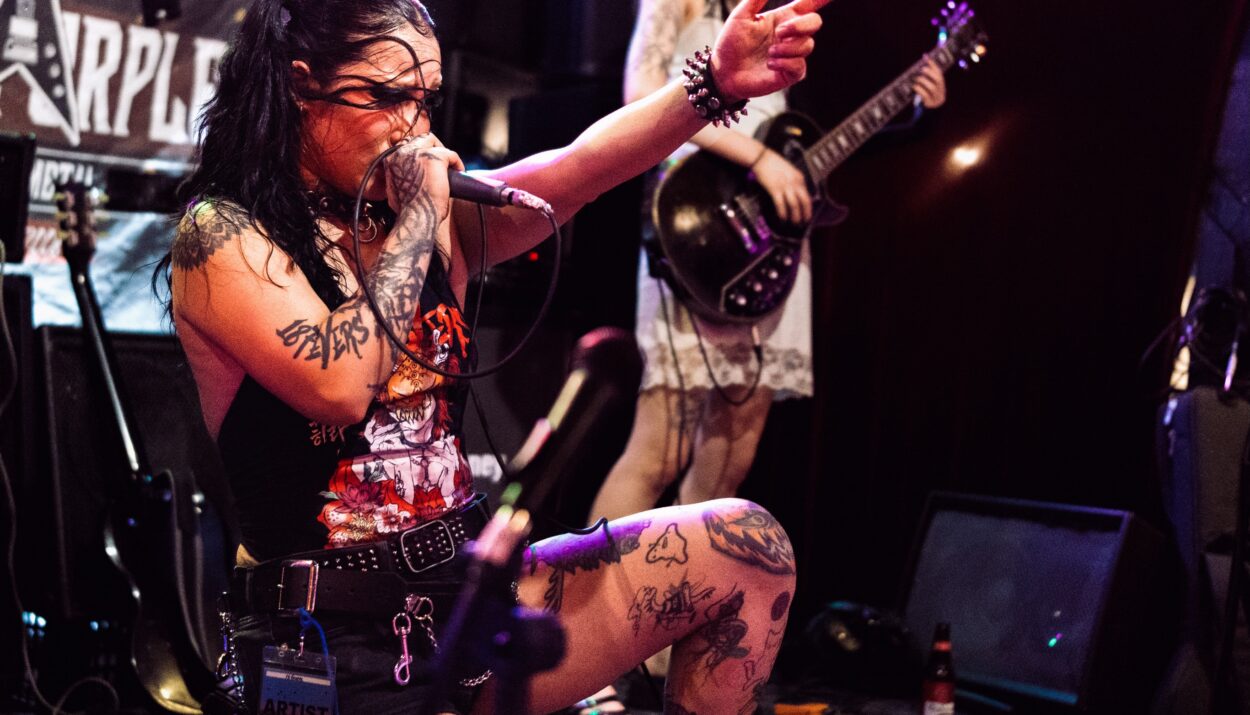
Christmas Kwon of 18Fevers playing live at Patchroom festival 2026. Source: @uigeumbu
It’s Saturday night. Sinchon’s streets are buzzing with energy as young revelers wander about seeking the next pub, restaurant, bar, noraebang, or just a fun night out. For Charity Lynn, she’s heading straight to 1finity Club, a small underground venue in Sinchon that hosts independent live music. Charity is an illustrator who has recently started organizing her own events. “The first year I was here,” Charity explains, “I think I only saw a handful of gigs. Now I go almost every weekend, sometimes even twice!”
Outside of South Korea, talk of Korean music tends to orient towards Kpop and its meteoric international rise over the past decade. Inside Korea, while big city streets remain awash with Kpop blasting from storefronts, the meandering alleyways of Seoul’s youth hubs and expat hotspots – Hongdae, Sinchon, Itaewon and Haebangchon (HBC) – hide an increasingly vibrant community where underground venues are hosting the talents of local indie bands and artists.
For many Koreans, expats, and international students in Seoul, the indie scene is more than just a place for entertainment on the weekend: it’s a community that brings together diverse audiences and voices. Many bands within the scene include a mix of Korean and non-Korean musicians playing for an equally eclectic audience, and all are unified through the shared appreciation of live music.
“Back in the States, I hadn’t really found a community within music,” says Charity. “But after being here and meeting all of these people that have become important to me, I just want to do what I can to lift them up in some way and make them happy.” For her, this has meant becoming closely involved with her favorite bands, including designing album covers, making posters and promotional materials, assisting in planning music festivals, and now, organizing her own events, which she describes as its own kind of creative project.
“The show I’m planning in December has its own concept,” she says. “There’s a narrative I’ve built around the idea of “noise” and “snow” and “city.” I get to… think about ways to make it special. I’m even planning to make a mini-zine for it. I’m kind of building this story that gets told at the gig. I think it’s much more fun that way, kind of like world-building.”
Cam Gorman, who performs as a solo artist under the name Big Baby Cam, also sees the value in the community, which has arisen, in part, due to Kakao group chats for fans of indie music. “As an audience member,” says Cam, “it’s difficult to make friends since people really do keep to themselves. So the group chats gave me people I “knew” and could go [to gigs] with.”
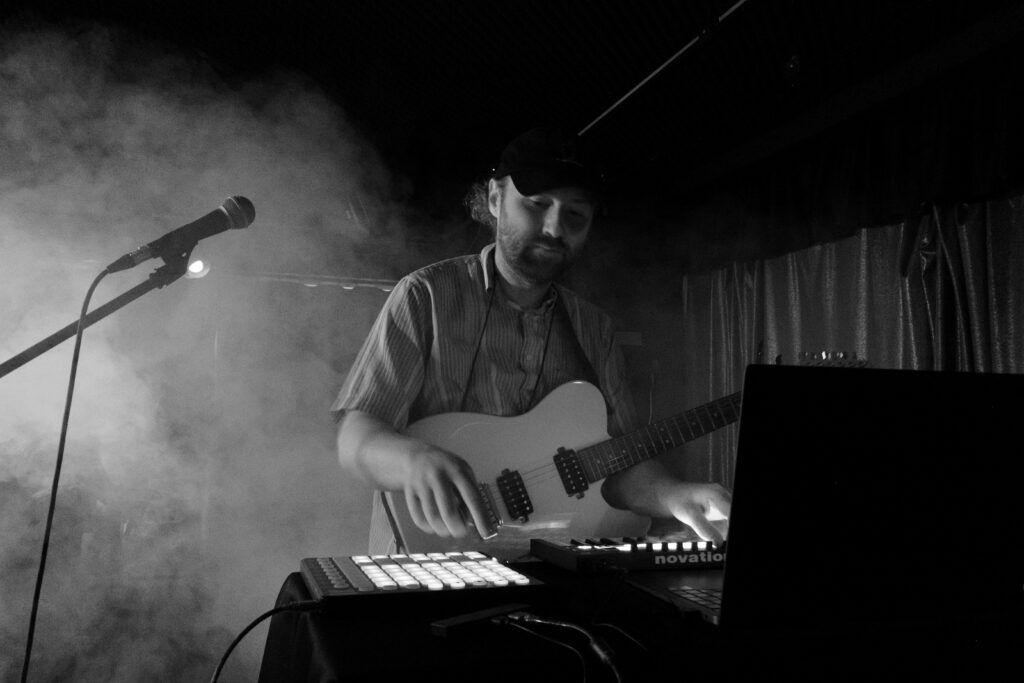
Cam Gorman aka Big Baby Cam playing at Uplift during the Block Party festival, September 12, 2026. Source: Emery Pigg [Instagram]
These chat groups also aided Cam in breaking into playing gigs in Seoul. “I wouldn’t be involved in music here at all if it weren’t for the group chats,” he says. “My first time performing [in Korea] happened specifically because of the big live music lovers chat! Jamie [Finn, Block Party music festival organiser] and I joked about me playing Block Party, and a few days later he messaged me [saying], “but really tho.””
Korea’s Birth of Indie Music
The sense of community among fans and artists within the indie music scene in Korea has roots in the country’s complicated political past. In the 1960s, the music listening club, C’est Si Bon, drew the attention of young musicians who would gather and play their own acoustic guitars. An independent folk music scene developed and expanded, where musicians and artists began experimenting with different styles and artforms.
Rock and psychedelic acts that centered around Korea’s “Godfather of Rock”, Shin Joong-hyun, soon emerged from numerous live music venues across Myeongdong. The area also became popular among Seoul’s experimental art groups including The Fourth Group, and Space & Time Group (ST), whose public art covertly criticised the oppressive political regime of the time.
Park Chung-hee’s authoritarian rule began cracking down on artistic freedoms in the mid-1970s. Park had already developed an antagonistic relationship with students, when, in 1971, young people took to the streets to protest military training on university campuses. These protests concluded with military occupation on the campuses, and the government continued to crackdown on what it saw as corrupting Western influence, including bodypaint, long hair, and go-go dancing. Yet, despite these bans, go-go clubs thrived, and folk music topped the charts.
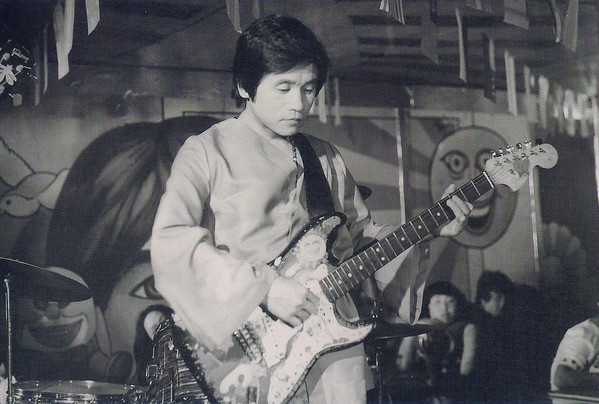
Korean “Godfather of Rock” Shin Joong-hyun. Source: Discogs
By the mid-1970s, after months of protests, the Park administration used the fall of South Vietnam as justification for implementing a complete ban on dissent. In an effort to shut down student activism, on May 13, 1975, the Presidential Emergency Decree No. 9 officially banned political criticism and all politically motivated group activities and gatherings.
In the months that followed, the Performance Ethics Committee would create a blacklist of 222 prohibited songs by Korean artists, and a further 261 by foreign artists, which were banned from broadcast and sale. According to a New York Times article published at the time, Korean government officials claimed the ban was not an antiforeign action, and it was “a purely voluntary measure” that had “nothing to do with government policy.” However, those who chose to defy the bans would risk giving up their rights to perform or record music.
In December, 1975, under suspicion of cannabis use, over 100 artists, including Shin Joong-hyun, Kim Jung-mi, and folk musicians who had begun at C’est Si Bon, were arrested and detained, and their music was prohibited and destroyed. In later years, some artists managed to recover their careers. Many faded almost entirely into obscurity. Only recently has Kim Jung-mi regained some recognition, as her song “Spring” was used for the opening credits for the popular 2025 Kdrama When Life Gives You Tangerines.
Out of the Darkness
Despite the attempts to snuff out the counter-culture, the indie spirit could not be quashed so easily. In the 1980s, another scene sprouted, this time centred around the youth hub in Sinchon where rock and heavy metal bands played to audiences of disaffected students struggling under the military rule. The influence of the previous era’s fight to play music continued through this new generation, as one of the first metal bands in Korea, Sinawe, was founded by Shin Joong-hyun’s son, Shin Daechul. Kpop, too, sprouted from these metal beginnings, as Seo Taiji, who would later form the seminal pop group Seo Taiji and Boys, also played bass for the metal band.
After democratisation, music from all over the world flooded Korea. “From around 1975 up until the early ’90s, Koreans didn’t have access to foreign music,” Jon Dunbar, a photographer and writer who has long connections to Korea’s underground music scene told Invisible Oranges. “Once that ban was lifted with the election of a civilian government, they could listen to anything they wanted and find it for free online.”
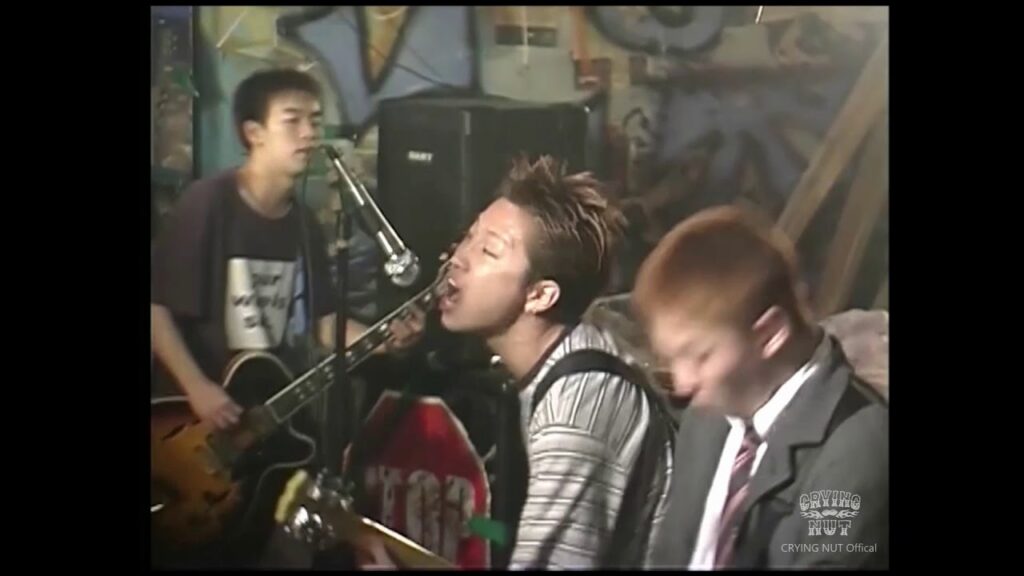
Korean punk band Crying Nut. Source: Punktuation
In the ‘90s, Sinchon’s rent prices spiked, so the scene shifted to Hongdae where Seoul’s artists, musicians, and misfits were starting to congregate. Here, the new Club Drug opened, initially in the salon style, like that of C’est Si Bon, where like-minded people shared their love of fringe styles of music together. Club Drug soon started hosting live music, and a punk scene gained momentum, centred around bands like Crying Nut and No Brain.
In those early days, playing live music in clubs was still banned, so many venues registered as restaurants to sidestep the legal barriers (a legal issue that echoes that of the 2026 “no dancing” controversy in Busan.) “Clubs weren’t legal,” Han Kyung-rock aka Captain Rock, Crying Nut’s bassist told The Korea Times, “so the police visited constantly. We paid fines out of our pockets, but nothing stopped us.”
Today’s Indie Scene
That sense of community still lingers in the underground punk and metal scene today. Yoo Bee, lead singer of groove metal band, Hammering, notices how the metal community has become closer to the punk ethos. “Punk is a genre that breathes and communicates with the audience. It’s a genre where you sing, dive, or dance, right?” He says. “In my opinion, punk is literally the community or the scene itself. Metal was similar to other genres at first, but as its popularity declined, its way of communicating with audiences seems to have become more like punk.”
The closeness, Yoo Bee explains, is something particular to audiences in Korea. “Korea is a society that values groups, society, and community,” he says. “Korean audiences often feel a sense of familiarity when they are in the same space as the artist. In fact, many believe that such a method supports the artist more.”
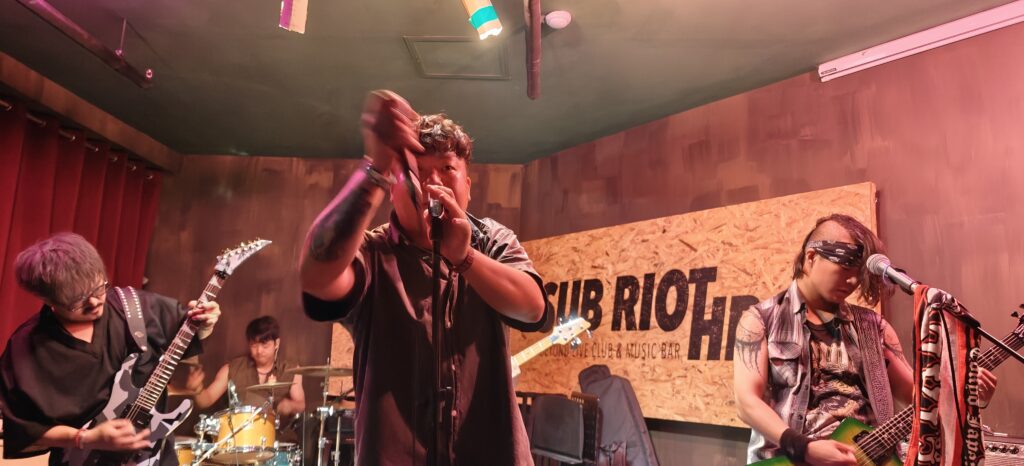
Groove metal band Hammering playing at Sub Riot during Block Party festival September 22, 2025. Source: Emery Pigg [Instagram]
Cam similarly echoes Yoo Bee’s sense that audiences in Korea are more overtly supportive of artists. “I grew up in the generation and in an area where it was cool to be as disinterested as possible [toward] the band in front of you, so it’s really refreshing that people are genuinely excited to watch a live performance here.”
However, in recent years, political and cultural pressures have started to put a strain on Seoul’s punk community. “[Korea is] full of art and music and literature, and it has a long history of speaking out against oppression and things that are not good for the public in general,” says Matt Nolan, bass player for the Seoul-based punk band, 18Fevers. “But here, depending on the generation, depending on the segment of the scene, you’re going to get pushback.”
Bands like 18Fevers are unapologetically outspoken about cultural issues that impact people who are considered downtrodden, forgotten, or rejected by society. Their lead singer, Christmas Kwon, identifies as a queer woman, and the band’s vocal support of transgender rights has caused upset among some fans within the scene.
“People get visibly annoyed or uncomfortable when we talk about trans rights,” says Matt. Yet the bassist remains unfazed. “I’m not gonna let someone come in and say, oh, keep the politics outside, keep the social commentary outside… if you’re gonna tell us that, then, don’t even bother. Go away.”
Political backlash has hit Yoo Bee’s band, Hammering, too. He explains that he and some band members had been exposed as appearing on a list of artists who supported the impeachment of former South Korean president, Yoon Suk-yeol. Despite Korea’s history of censoring artists and musicians, Yoo Bee seems to take the controversy in stride. “It’s okay. Usually [the people] who leave comments like that, they didn’t listen to the music. [They] just want to find someone to blame.”
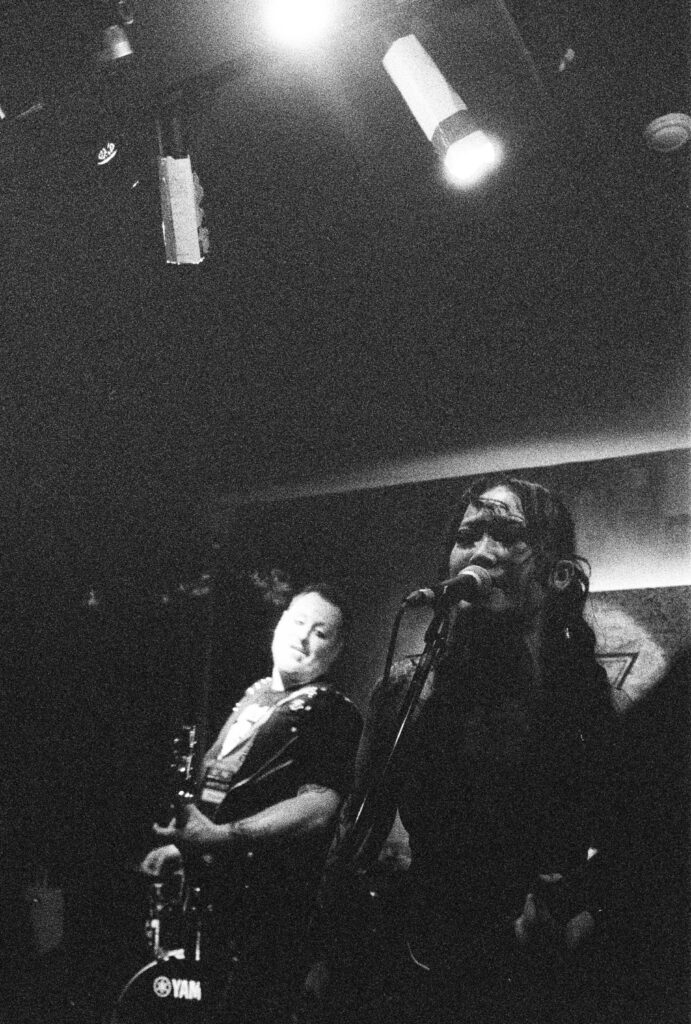
Matt Nolan and Christmas Kwon of punk band 18Fevers. Source: Bex Anthoney
Even while the backlash hits artists and musicians within communities like the indie music scene, Matt and Yoo Bee’s ability to fight back or brush it off is a testament to how far things have come in South Korea. It’s easy to forget how new democracy is in this country, and while moments like President Yoon’s six-hour martial law proclamation in December 2024 come as reminders of how precious and fragile it can be, Korea’s resilient indie music community similarly demonstrate how far the country has progressed.
“[Some people] just want to have fun, drink beer, forget about the world,” says Matt, “which is fine, but that’s not punk rock. There are plenty of pop punk bands singing about girlfriends and high school days and, you know, useless s–t like that. You can go listen to that.”
A New Wave of Indie
While today’s underground music scene in Korea is far from sharing the spotlight with Kpop’s global domination, this emerging new wave of community-centred artistry in Seoul is becoming a safe haven for those outside the mainstream.
“I really hope the cultural and community aspect can develop more,” says Matt, “because I think that is the key missing ingredient to get more people into the scene… It’s supposed to be a community… You’re supposed to participate. You’re supposed to meet people. You’re supposed to explore your creativity. Maybe you start a band suddenly, like you never thought you could, or you get into photography, or you get into making zines. That’s what it’s supposed to be about.”
Charity’s work supporting her favorite bands through her art and upcoming gig embodies the soul of this underground community. “I think it’s easy to feel really lonely here,” she says. “I think that if I didn’t find this community right away, I would have a very different view on my life here.”
Spotify Playlist of artists mentioned in the article + recommendations from the author

- Rage Against the KPop Machine: Korean Indie and the Sound of Resistance - November 18, 2026